
Ορισμός της Αγάπης - Ντουέτο Τραγουδιού
Greek duet - contradiction as shared experience, no longer just within or about life — it is between people
Εισαγωγή
Το ντουέτο επιτρέπει στις αντιφάσεις των στίχων να εκφράζονται διαμέσου φωνών, αντί να περιορίζονται σε μία. Το παράδοξο γίνεται κάτι που ανταλλάσσεται, αντηχεί και αναδιαμορφώνεται διακριτικά στον διάλογο.
Η εικόνα της αγάπης που μοιάζει με τσιγάρο μέσα στη βαριά νύχτα υποδηλώνει μια φευγαλέα αλλά έντονη εμπειρία.
English Translation
The duet allows the contradictions in the lyrics to be spoken across voices, rather than contained within one. The paradox becomes something exchanged, echoed, and subtly reshaped in dialogue.
The imagery of love being like a cigarette in the heavy night suggests a fleeting yet intense experience.
Ελληνικό ποίημα / English Poem
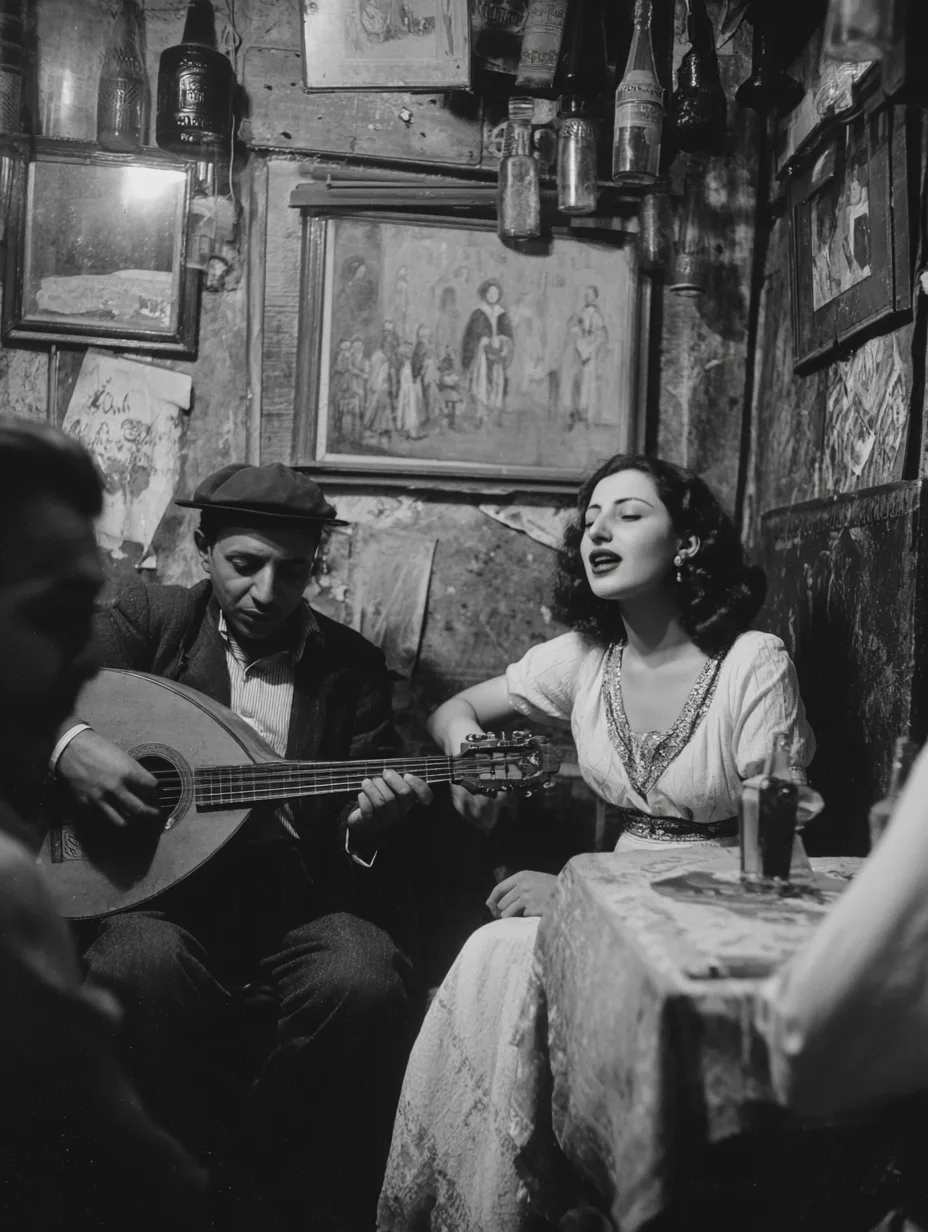
The Greek lyrics sit left and the English translation sits right of the centred cover, with further explanations about the song continuing full width below.
Στίχοι τραγουδιού
[Στίχος - Ανδρική φωνή]
Θέ-λω γυ-ναί-κα μου | να σε πά-ρω,
μα η καρ-διά μου | λεί-ει ψέ-μα-τα βα-ριά,
σε α-γα-πά-ω | και ό-πως θα σε φά-ω,
σαν τσι-γά-ρο μες | στη νύ-χτα τη βα-θιά.
[Στίχος - γυναικεία φωνητικά]
Λες πως γυ-ναί-κα σου | θα με κα-νείς,
μα κρα-τάς δρό-μο | μυσ-τι-κό,
με λό-για γλυ-κά | με να-νου-ρί-ζεις,
και μου χρε-ώνεις | τον κα-η-μό.
[Χορωδία - άνδρες και γυναίκες τραγουδιστές]
Έ-λα κον-τά μου | και ά-σε με,
μα μη μου δε-νέ-σες | πο-λύ,
εί-σαι δι-κή μου | και ε-λεύ-θε-ρη,
και αυ-τός ο πό-νος | μας κρα-τεί.
[Στίχος - Ανδρική φωνή]
Ε-λεύ-θε-ρη σε | θέ-λω, μάγ-κα μου,
μα ό-λη δι-κή μου | να σαι,
να μη στη-ρί-ζεις πο-τέ | σε με,
μα ό-πως να ζεις | μες στην καρ-διά μου ει.
[Στίχος - γυναικεία φωνητικά]
Με θες κον-τά σου | μα όχι δε-μέ-νη,
με θες δι-κή σου | και αλλού να πας,
να μη ζη-τά-ω | να μη πο-νά-ω,
μα να υ-πάρ-χω | σαν σκιάς.
[Χορωδία - άνδρες και γυναίκες τραγουδιστές]
Έ-λα κον-τά μου | και ά-σε με,
μα μη μου δε-νέ-σες | πο-λύ,
εί-σαι δι-κή μου | και ε-λεύ-θε-ρη,
και αυ-τός ο πό-νος | μας κρα-τεί.
[Στίχος - Ανδρική φωνή]
Τον δρό-μο σου | τον σε-βέ-ω,
μα θέ-λω να σε πλά-σω | σαν πηλό,
ό,τι και αν λες | πως θέ-λεις να γί-νεις,
ε-γώ θα αλ-λά-ζω ό,τι | σου λέ-ω και α-νοί-γω.
[Στίχος - γυναικεία φωνητικά]
Λες σε-βέ-σαι τον δρό-μο μου |
μα τον χα-ρά-ζεις απ’ την αρχή,
με α-γα-πάς ό-πως εί-μαι | λες,
μα θες να γί-νω ό,τι | σου πει η φωνή.
[Χορωδία - άνδρες και γυναίκες τραγουδιστές]
Έ-λα κον-τά μου | και ά-σε με,
μα μη μου δε-νέ-σες | πο-λύ,
εί-σαι δι-κή μου | και ε-λεύ-θε-ρη,
και αυ-τός ο πό-νος | μας κρα-τεί.
[Στίχος - Ανδρική φωνή]
Θέ-λω να στέ-κεις | πε-ρή-φα-νη και δύ-να-τη,
μα υπά-κου-ο εί-σαι | δικαί-ος,
να με μα-λώ-νεις | όταν ε-γώ σφά-λω,
και να σω-πα-είς | δί-χως φό-ρα.
[Στίχος - γυναικεία φωνητικά]
Με θες πε-ρή-φα-νη | και δύ-να-τη,
μα σκύ-φτη σαν θα | φωνά-ξεις,
να σε μα-λώ-νω | να σω-πα-νώ,
και στο τε-λός να | ξε-χά-σεις.
[Χορωδία - άνδρες και γυναίκες τραγουδιστές]
Έ-λα κον-τά μου | και ά-σε με,
εί-στε η α-γά-πη | αυ-τή,
μι-σή φω-τιά | μι-σή μα-χα-ί-ρι,
και ει-δώ θεί | από αρχή.
[Στίχος - γυναικεία φωνητικά]
Μη με φωνά-ζεις | και ά-σε με,
δε θα χα-θώ για να σω-θείς,
αν η αγά-πη είναι | μα-χα-ί-ρι,
ε-γώ δε θα εί-μαι | αυτή που θα κο-πείς.
Lyrics
[Verse - Male vocal]
I want my wife | to take you,
but my heart | tells a heavy lie,
I love you | and how I will eat you,
like a cigarette in | the deep night.
[Verse - Female vocal]
You say you will make me your wife | but you keep your way
secret | with sweet words
you nurture me,
and you owe me | the pain.
[Chorus - Male and Female]
Come to me | and let me,
but don't tie me | too much,
you are mine | and free,
and this pain | holds us.
[Verse - Male vocal]
Free you | I want, my love,
but all mine | to be,
never lean on | me,
but how you live | is in my heart.
[Verse - Female vocal]
You want me near you | but not tied,
you want me to be yours | and go somewhere else,
not to live | not to hurt,
but to exist | like a shadow.
[Chorus - Male and Female]
Come near me | and let me,
but don't tie me | too much,
you are mine | and free,
and this pain | holds us.
[Verse - Male vocal]
I respect your way,
but I want to mold you | like clay,
whatever you say | how you want to be,
I will change what | I tell you and I open.
[Verse - Female vocal]
You say you respect my way |
but you've hated it from the beginning,
you love me as I am |you say,
but you want me to be whatever | the voice tells you.
[Chorus - Male and Female]
Come to me |and let me,
but don't tie me down | very,
you are mine | and free,
and this pain | holds us.
Verse - Male vocal]
I want you to stand | proud and strong,
but you must be | right,
to scold me | when I am wrong,
and to be silent | without fear.
[Verse - Female vocal]
You want me proud | and strong,
but to bend down as if to | shout,
so that I may scold you | to be silent,
and in the end to | forget.
[Chorus - Male and Female ]
Come to me | and leave me,
this is love | this,
half fire | half sword,
and see it | from the beginning.
[Verse - Female vocal]
Don't call me | and leave me,
I won't lose to save you,
if love is | a sword,
I won't be | the one you cut.
Greek Duet Version (1)
Listen to the Greek Duet version (1) on Spotify →Greek Duet Version (2)
Listen to the Greek Duet version (2) on Spotify →Greek Duet Version (3)
Listen to the Greek Duet version (3) on Spotify →Greek duet
In Rembetiko (Greek urban folk/blues), "duet songs" typically refer to tracks featuring two singers—often trading verses or harmonizing in traditional folk scales. Historically recorded in Piraeus and Smyrna in the 1930s to 1950s, these duets are emotional, narrative, and frequently focus on heartbreak, love, and working-class life.
In early Rembetiko recordings, duets were a way to showcase different regional vocal styles (like the nasal, ornamented amanes of Smyrna) or contrast a deep, masculine voice with a lighter, feminine one. The lyrics often play out like a conversation between two lovers or two friends drinking at a teké, the traditional Greek underground dens from the early 20th century where musicians gathered to play Rembetiko (Greek Blues) music.
Interaction Between Music & Lyrics
This song is set up as a true call-and-response duet, side by side with the male and female voices, alternating verses and keeping the chorus slightly shared so it feels like a live Rembetiko performance.
While the man expresses deep affection while simultaneously struggling with desires for freedom, control, and mutual understanding, the woman shares the same pain, but she’s not naïve. She hears the contradictions and answers them on her own terms. Strong, wounded, lucid.
Version 1 is the closest to the original duet dialogue, with the other two slightly deviating from it, but I just loved the tunes.
Technical Snapshot (Concise)
- Tempo & groove: BPM (Version 1: 140 (Cyanite); Version 2: 129; Version 3: 143): Moderate tempo with a steady, balanced rhythmic feel, supporting clear phrasing and vocal exchange.
- Harmony:Version 1: C Minor (Cyanite); Version 2: C# Minor; Version 3: E Minor. Tonal and diatonic with gentle progressions, providing a stable foundation for interplay between voices.
- Instrumentation & texture: Light ensemble or acoustic-led arrangement, leaving space for two distinct vocal lines to interact and overlap.
- Dynamics & production: Moderately dynamic with emphasis on vocal balance and clarity, highlighting contrast and connection between the two voices.